
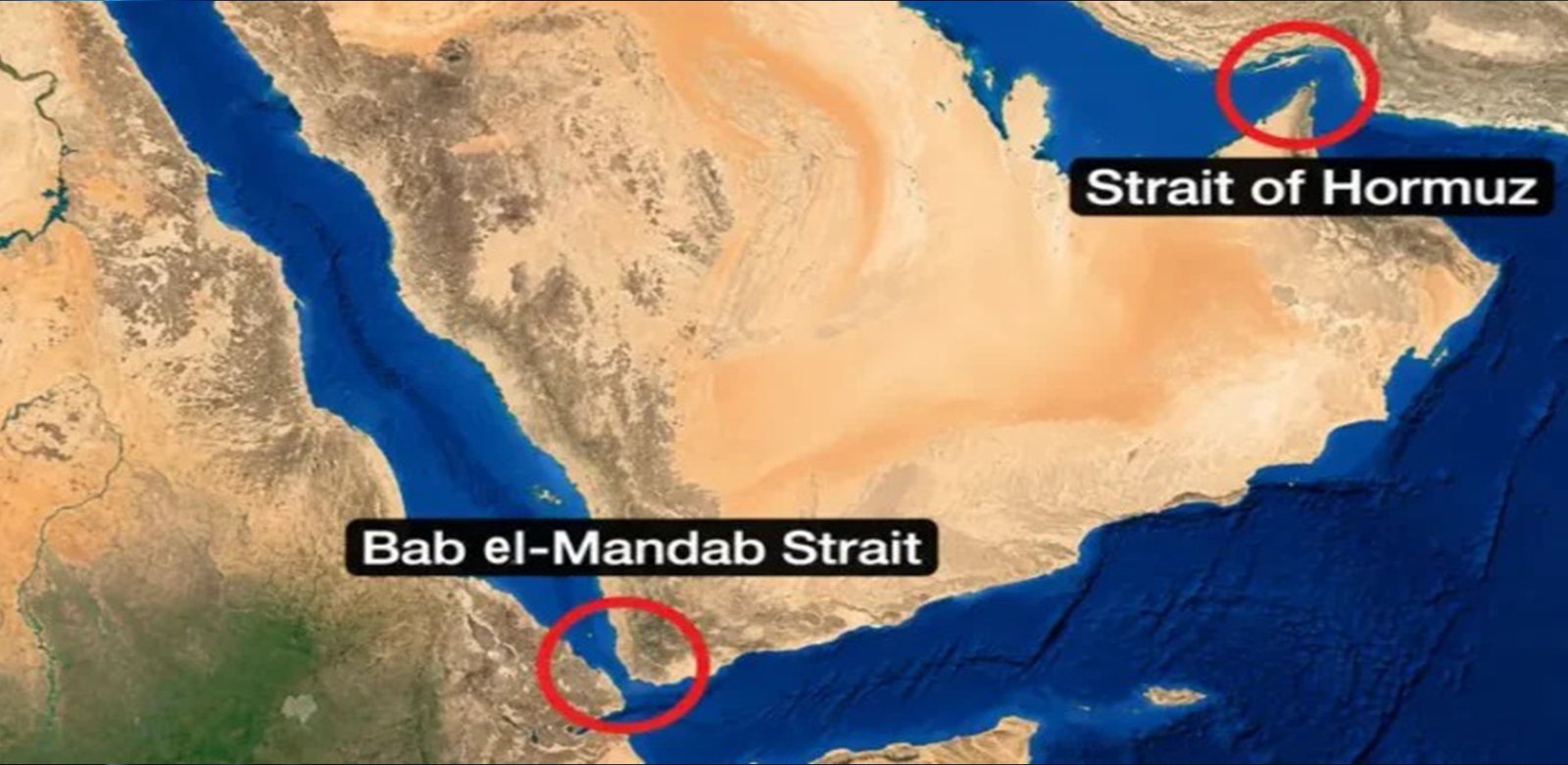
The Houthi group in Yemen announced the imposition of a decisive maritime blockade through the closure of the Bab el-Mandeb Strait, in a dangerous development that threatens to open a new front of confrontation with the United States and expand the scope of risks to affect international shipping and energy supply chains beyond the borders of the Arabian Gulf.
This announcement places a pivotal waterway at the center of an unprecedented state of uncertainty and security risks, particularly with growing concerns over the simultaneous disruption of the Bab el-Mandeb and Hormuz Straits, a scenario that threatens to paralyze global maritime trade and cut off the main arteries for the transportation of oil and commodities.
On the economic front, Roya News Network revealed that these disruptions are expected to cause a double shock to global energy markets, including the potential absence of more than twenty-seven percent of oil supplies and eight percent of liquefied natural gas shipments, in addition to threatening Saudi oil exports heading toward Asia through the Red Sea.
Shipping lines are also moving to divert their vessels toward the Cape of Good Hope route, adding approximately two weeks to the journey time and immediately driving up crude oil prices, with forecasts ranging between one hundred and fifteen and one hundred and twenty dollars per barrel, alongside a sharp increase in insurance premiums and war-risk surcharges.
The repercussions are not limited to the fuel sector alone, but extend to cast a shadow over food security and the logistics supply chains on which factories and global markets depend. Delays in container arrivals and port congestion result in additional operating charges borne by companies and ultimately passed on to the final consumer.
These accumulated costs of transporting raw materials and agricultural products contribute to fueling waves of food inflation, placing many developing countries and Western markets under increasing living and economic pressures.
At the conclusion of this tense situation, financial analysts warn that the continuation of this situation could push international economic rules into a severe stagflationary recession combining declining growth and rising prices, placing central banks before complex choices regarding monetary policies and interest rates.
Meanwhile, intensive diplomatic efforts continue through regional mediators to contain the escalation and revive de-escalation efforts, amid international anticipation of what the coming days will bring regarding whether these announcements are merely political pressure cards or the beginning of a broader confrontation on the ground.
Discover more from المنتدى الدولى للصحافة والإعلام
Subscribe to get the latest posts sent to your email.