
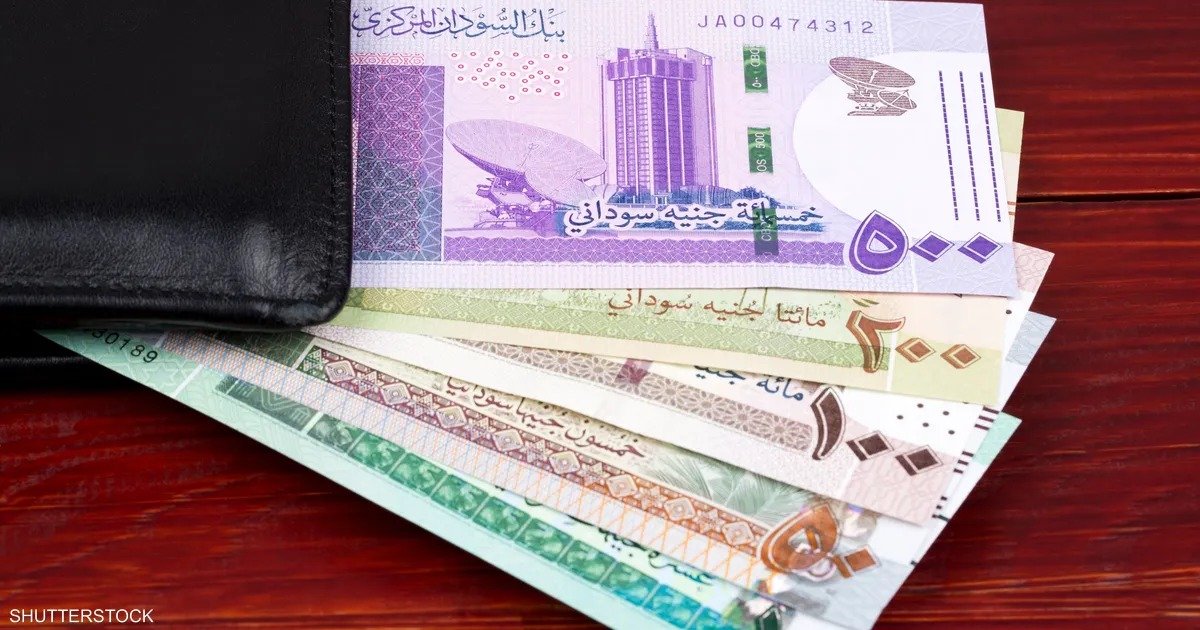
The conflict in Sudan has entered a new phase that goes beyond military confrontation into an open economic war, after areas controlled by the Rapid Support Forces (RSF) began circulating new banknotes of the Sudanese pound.
According to a report published by the Faros Center for Strategic Studies, this development raises complex questions about the source of this money. It comes amid widespread political and economic warnings that such a step could deepen the country’s de facto division and potentially turn it into a full separation between areas controlled by the army and those under RSF control, particularly in the vast Darfur region in western Sudan.
The background of the crisis dates back to 2024, when the Sudanese government led by the army declared the old banknotes invalid and began issuing new denominations of 500 and 1000 pounds. The RSF rejected this decision outright and banned the circulation of the new notes in the areas under its control. This led to a gradual and severe cash shortage in RSF-held territories, significantly affecting markets and the daily lives of civilians.
To address this financial pressure, the “Tasis” authority—an alternative administration formed by the RSF—began practical steps to manage liquidity. In late May, residents, public employees, and RSF fighters were reportedly surprised to receive salaries in brand-new, unused banknotes dated May 2022, bearing the signature of Hussein Yahya Jangoul, the central bank governor from the pre-war period, who was recently appointed head of a new central bank operating under the “Tasis” authority.
While bankers in the city of Nyala confirmed that the notes appear newly printed and identical in design to official currency, the prime minister of the “Tasis” authority, Mohammed Hassan al-Ta’ayshi, refused to disclose the source of the funds, stating only that liquidity provision is based on “carefully designed technical plans” aimed at maintaining economic stability.
On the other hand, analysts and research centers believe this parallel currency will face significant international obstacles, as many countries are unlikely to recognize a separate banking system emerging from the ongoing armed conflict that has persisted since April 2023.
Discover more from المنتدى الدولى للصحافة والإعلام
Subscribe to get the latest posts sent to your email.