

 By Prof. Dr. Omar Ali Al-Harash – President of the Supreme Council of the Arab Union of Journalists, Media Professionals, and Arab Intellectuals
Reading the current Yemeni–Saudi scene requires a precise distinction between media and political escalation on the one hand, and the actual possibilities on the ground on the other—especially in light of recent developments led by Sanaa, including statements on general mobilization and the so-called “Battle to Break the Siege.”
The objective reality indicates that the current situation oscillates between “hard political pressure” and the “brink of the abyss,” and it can be broken down into the following dimensions:
1. Background of Sanaa’s Media Escalation
The rhetoric issued recently from Sanaa (through statements by the Parliament and Shura Councils, as well as mobilization announcements) carries a high tone, hinting at military options and the possibility of resuming strikes deep inside Saudi territory. This escalation is driven by several key factors:
- The economic and salary file: Sanaa believes that Saudi Arabia is delaying the implementation of the roadmap commitments and previous understandings related to lifting economic restrictions, fully reopening airports and seaports, and disbursing salaries from oil and gas revenues.
- Linkage to Gaza and the Red Sea file: Amid the ongoing confrontation in the Red Sea with the United States and the United Kingdom, Sanaa seeks to prevent Riyadh from providing any logistical or political support to the international coalition against it, or facilitating ground operations by local opponents in the western coast or southern provinces.
- Absorbing internal popular pressure: Some observers believe that external war rhetoric is sometimes used as a tool to redirect public anger caused by deteriorating living and economic conditions in areas under control toward an “external enemy.”
2. The Saudi Position and Red Lines
On the other hand, Saudi Arabia appears highly cautious about slipping back into the military quagmire in Yemen. Riyadh places its security stability and economic priorities (Vision 2030) at the top of its agenda.
Ongoing diplomatic channels—including direct and indirect talks via Oman or with Iran—indicate that Saudi Arabia prefers a political solution and “zeroing out” outstanding problems.
However, Saudi Arabia is taking the threats seriously from a defensive standpoint, having reinforced its air defense systems along the southern border as a precaution against any surprises.
3. Is an Actual War Coming?
The most likely scenario at present is a “brinkmanship policy” rather than a full-scale war like the one that began in 2015.
The goal is “negotiation through fire”: through media and tribal mobilization, the Sanaa government seeks to extract economic gains and concessions from Riyadh and push it to sign a peace roadmap under the proposed terms, taking advantage of Saudi Arabia’s strong desire for de-escalation.
Limited escalation possibilities: If political pressure fails, we may witness localized escalation or limited warning strikes (economic targets or energy facilities) to demonstrate seriousness. However, regional and international actors (including those involved in the Beijing-mediated Iranian–Saudi track) are making intensive efforts to prevent a complete collapse of the fragile truce.
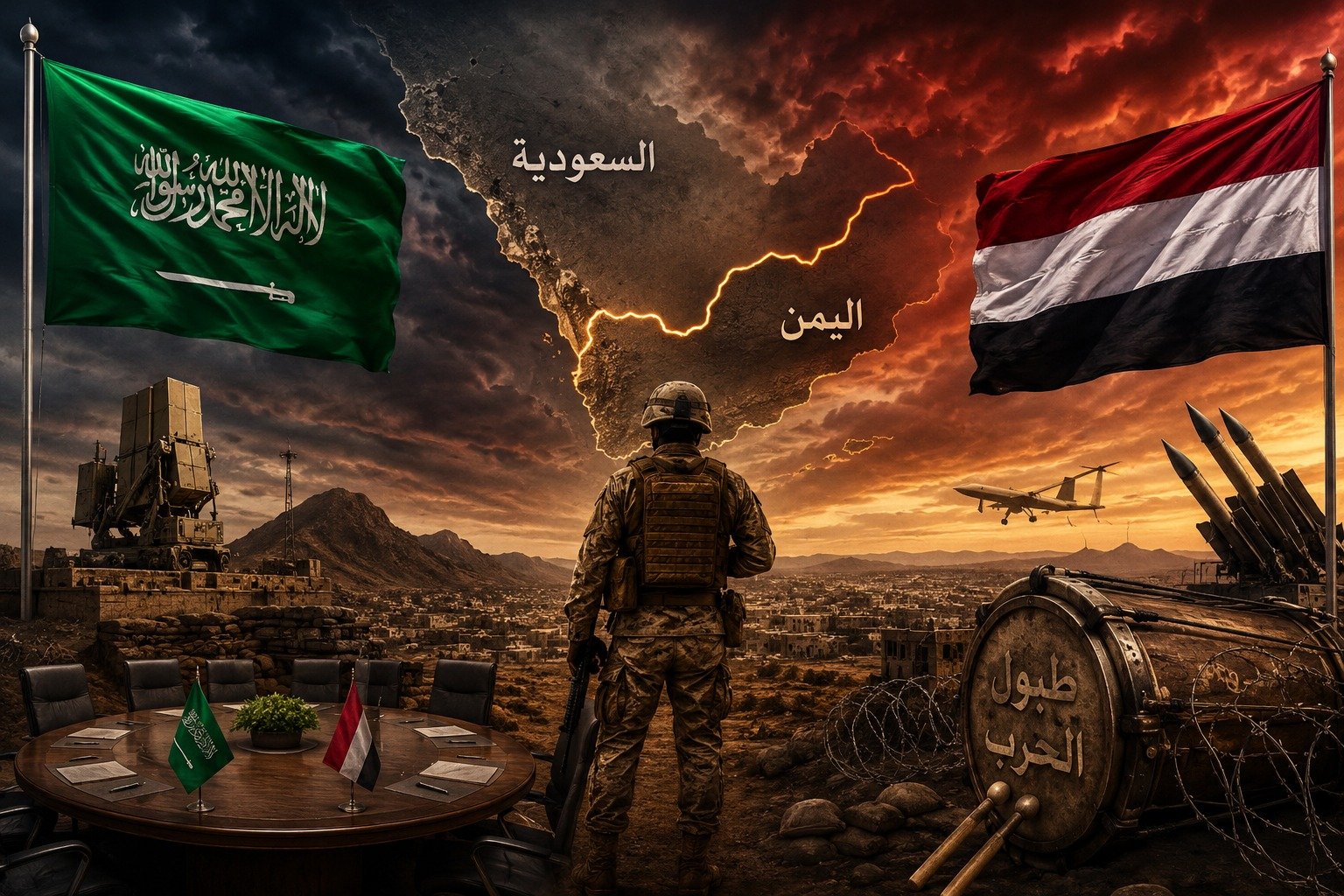
Based on professional indicators, the drums of war are indeed being beaten loudly in the media as a strategic pressure tool, but the actual will to move toward an open and devastating war remains constrained by complex cost–benefit calculations on both the Sanaa and Riyadh sides.
Discover more from المنتدى الدولى للصحافة والإعلام
Subscribe to get the latest posts sent to your email.