 Dr. Essam Al-Barram
Since the dawn of history, wars have been deeply intertwined with human life. They are among the most influential phenomena that have left their mark on the course of civilizations and in the memory of peoples. However, wars are not narrated only in history books or in political reports; they also find their echo in literature and art, where the harsh experience is transformed into creative material that expresses human pain and reveals the dimensions of tragedy that numbers and dry facts fail to convey. When wars speak the language of literature and art, they do not merely present a narration of events; they open a window to understanding the human being in moments of weakness and strength, in fear and hope, and in the perpetual struggle for survival and dignity.
Throughout the ages, literature has been a mirror reflecting the transformations of societies and their conflicts, and wars have not been an exception to this role. Novels, poems, and plays that have addressed wars were not merely records of events; rather, they were attempts to understand the human experience in moments of collapse and severe trial. The writer does not write about war from the position of a military commander or historian, but from within the human experience, through the suffering of the ordinary individual who suddenly finds himself at the heart of a great tragedy that exceeds his ability to understand or control.
In this context, literature becomes a vast human space for embodying pain and memory, where individual stories transform into symbols reflecting a collective tragedy. A novel set in times of war often reveals the details of daily life that official history overlooks, such as the fear of children, the waiting of mothers, the anxiety of soldiers, and the collapse of cities that turn into ruins. Through these small details, the image of war emerges as a comprehensive human experience that touches every aspect of life.
Poetry, however, has historically been the most sensitive voice in expressing the effects of wars. The poem possesses a unique ability to capture moments of pain, longing, and loss, transforming them into a condensed language that penetrates directly into the reader’s conscience. In many cases, the poem becomes a human cry against violence, or a collective elegy that immortalizes the memory of the victims. Poets across different cultures have succeeded in transforming the bitter experience of wars into profound reflections on the meaning of life and death, and on the fragility of the human being before the forces of history.
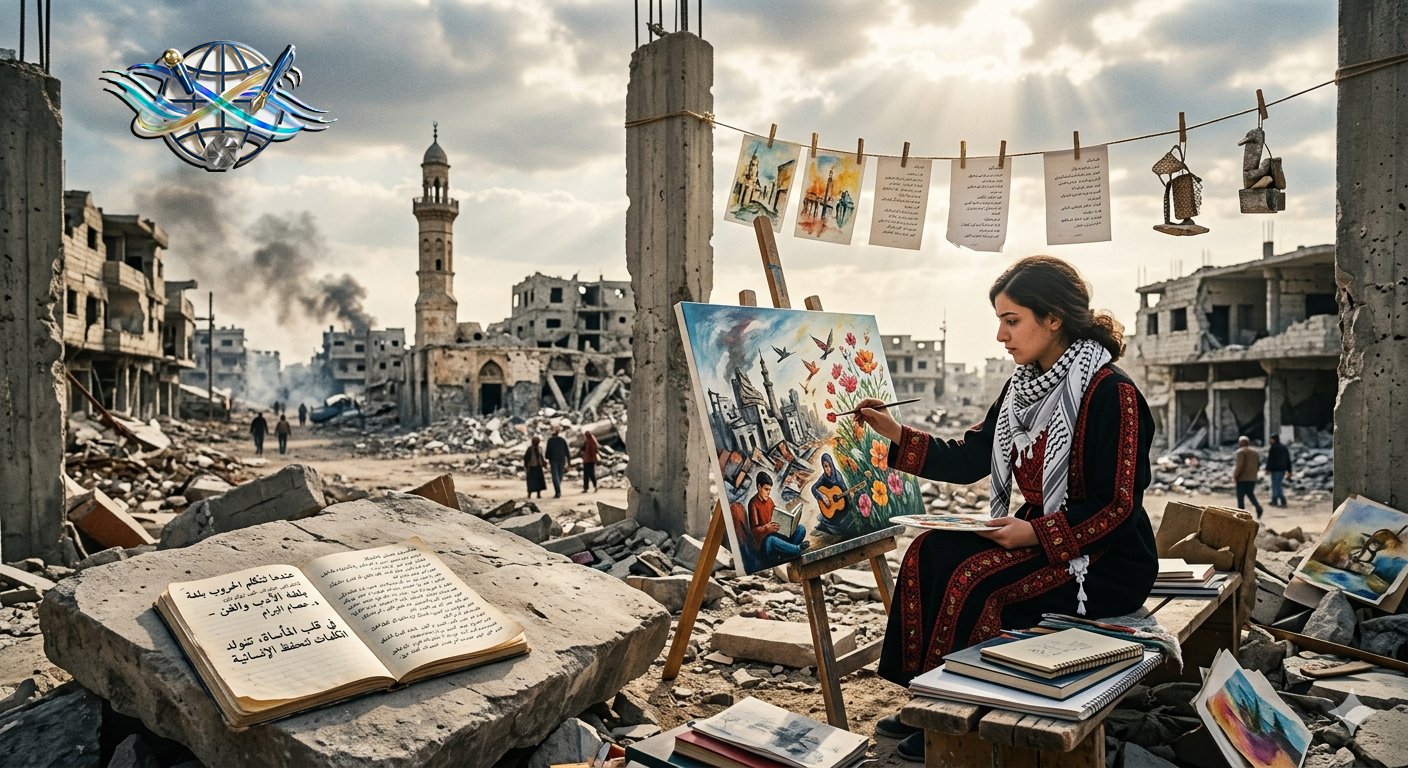
Literature alone has not granted wars a human language; art has also participated in this civilizational mission. The artistic painting and the visual image are capable of conveying scenes of war in a way that transcends the limits of language. Visual arts have played an important role in documenting the effects of wars and in expressing the human shock they leave in the soul. Destroyed cities, exhausted faces, and empty houses have turned in many artistic works into symbols reflecting the tragedy of the modern age, reminding the world that behind every war lies a human story that cannot be reduced to calculations of politics or strategy.
The relationship between war and creativity is complex and contradictory at the same time. War, by its nature, is a destructive act that undermines the foundations of life and threatens human values, while literature and art seek to build meaning and defend the humanity of the human being. Yet this contradiction is precisely what gives creativity its power, because the artist or writer finds himself compelled to express the harsh reality and attempt to understand or transcend it. Thus, it can be said that many of the great literary and artistic works in human history were born from the womb of crises and conflicts.
The role of literature and art in times of war is not limited to documenting tragedy; it also extends to creating a space for reflection and critique. Creative works that address wars often raise profound questions about the causes of violence, the limits of power, and the meaning of justice. Through these questions, literature becomes a tool for thinking about the future of humanity and a means of reviewing the mistakes that led to conflicts. In this way, creativity becomes a form of cultural resistance that seeks to protect human values in the face of violence.
On the other hand, the arts play an important role in preserving the memory of peoples after wars end. Historical events may be forgotten or reinterpreted over time, but literary and artistic works remain witnesses to the human experience in all its complexities. They preserve the feelings of fear, hope, and loss that people lived through in those moments, and they grant later generations the opportunity to understand the past and learn from it. In this way, literature and art become a bridge linking the past and the present, helping societies to comprehend their painful experiences.
Creativity in times of war also reflects the human capacity to cling to life despite all circumstances. The artist who paints in a devastated city or the writer who writes amid an atmosphere of fear is, in his own way, declaring that culture is capable of resilience even in the darkest moments. This ability to create amid destruction is evidence that human beings do not easily surrender to the forces of violence; rather, they constantly strive to rebuild meaning and defend their human dignity.
In our contemporary world, where conflicts continue in different regions of the globe, literature and art remain among the most important means of understanding the effects of wars on societies. Political reports may provide precise analyses of positions and strategies, yet they often fail to convey the human experience in all its dimensions. Creativity, however, possesses the ability to overcome this deficiency by offering a profound human vision that focuses on the suffering of people and their dreams of peace and stability.
Wars, whatever their causes, leave deep scars in the memory of peoples, and these scars cannot be overcome except through awareness and reflection. Here lies the role of literature and art in transforming pain into knowledge, and turning harsh experience into an opportunity to think about a more humane future. When wars speak the language of literature and art, they reveal their naked truth and remind the world that peace is not merely a political option, but a civilizational necessity to ensure the continuation of life.
Thus, it can be said that literature and art do not possess the power to stop wars, but they possess another power that is no less important: the power to preserve the humanity of the human being amid violence and to remind the world of the value of life, freedom, and dignity. Through this profound message, cultural creativity remains a witness to the tragedies of history, and at the same time carries a constant hope that humanity is capable, despite everything, of transforming pain into beauty and suffering into meaning.
Expanding the discussion of the relationship between wars and literature and art reveals another dimension that is no less important: the impact of these experiences on the identity of societies and their culture. War does not only threaten people’s lives and property; it also threatens the collective memory that shapes culture and the values that define the way society understands itself and the world around it. Here the role of literature and art appears as a mirror and a documenter of these experiences, for their role is not limited to conveying events but extends to mapping human emotion and understanding how fear, hope, and suffering shape the character of societies and reshape their collective consciousness.
Moreover, literature and art can serve as critical tools for reflecting on the causes and consequences of wars, as they allow the writer and the artist to review the historical decisions and the social and political transformations that led to conflict. In novels and artistic paintings, there is always space to question justice, freedom, and human destiny, which makes literary and artistic culture more capable of influencing the reader and society than merely dry reports or political analyses.
In our contemporary time, where wars and conflicts continue to spread, the need becomes urgent for such creative works that preserve the human being within himself and remind him that beauty and creativity can be born even amid destruction, and that art and literature form a fortress for the spirit and a means of profound human communication between generations, preserving the psychological and cultural peace of societies affected by wars.
Discover more from المنتدى الدولى للصحافة والإعلام
Subscribe to get the latest posts sent to your email.