
 Dr. Zahir Al-Abbad
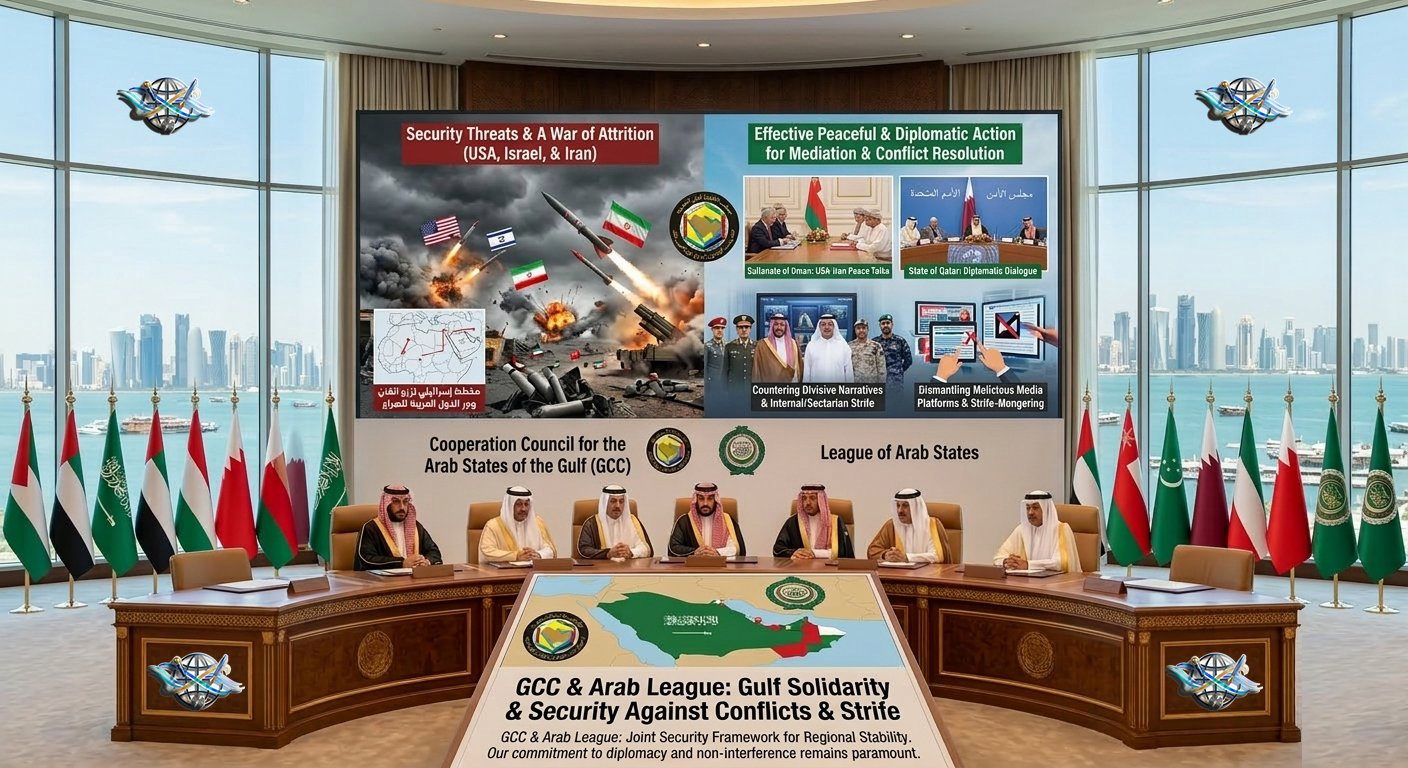
The Gulf and Arab region is witnessing, during this critical period, increasing tensions due to regional and international conflicts, in which the interests of the United States, Israel, and Iran intersect, imposing complex security challenges on the Gulf Cooperation Council countries. Under these circumstances, the current stage requires strengthening the role of official Arab institutions, including the Gulf Cooperation Council and the Arab League, to maintain stability and protect the interests of the peoples of the region.
Attempts by some external powers to involve the Council’s countries in conflicts unrelated to them, and the dissemination of fabricated news to incite sectarian, ideological, and ethnic strife, make political prudence a vital necessity. Therefore, the crucial role of peaceful and diplomatic action emerges, through which the Gulf states work to resolve disputes between major powers peacefully, hosting meetings among the concerned parties while upholding international principles of non-interference in internal affairs and good neighborliness.
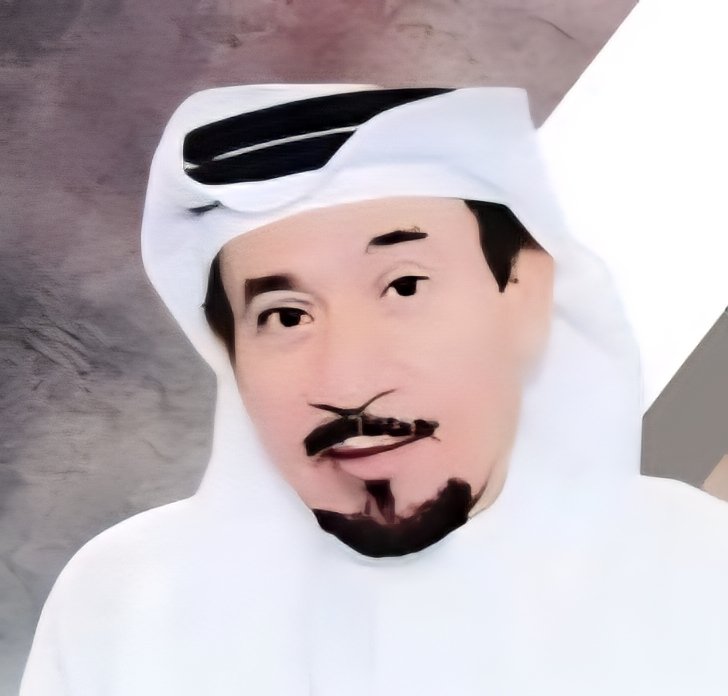
In this context, Dr. Zahir Al-Abbad, Vice President of Global Forum for Journalism and Media (GFJM)
and President of the Kuwait Journalists Syndicate, detailed his position and perspective on the need to enhance the effectiveness of Gulf and Arab action in the face of current security and media challenges.
“We hope that the Gulf Cooperation Council and the Arab League intensify their efforts during these times, in which the Council’s countries are exposed to security threats as a result of the violent conflict that erupted between the United States, Israel, and Iran, with planned attempts to involve the Council’s countries in this conflict despite their having no connection to it, which is a plan previously drawn by Israel.
He stated that the Gulf countries, peaceful by nature, have worked and continue to work to resolve the conflict peacefully and effectively between the United States and Iran, hosting meetings that brought the two sides together at negotiation tables in the Sultanate of Oman and the State of Qatar. Moreover, they have always sought, through their participation in United Nations meetings, the UN Security Council, and the Arab League, to strengthen regional security, resolve disputes through constructive dialogue, implement international laws, avoid interference in internal affairs, and uphold the principles of good neighborliness.
He affirmed that it is necessary for the Gulf Cooperation Council to act more effectively with all international, Arab, and Islamic organizations through peaceful and political action to prevent Iranian aggression, and to confront attempts by some infiltrators to incite internal sectarian, ideological, and ethnic strife in each Council country, and to create discord among Council countries through the dissemination of fabricated news designed to ignite Gulf and Arab conflicts, which, until now, has failed.
This is due to the wisdom of Gulf leaders in not succumbing to Israeli plans aimed at igniting war between Arab countries and Iran, stirring strife, creating chaos, and undermining internal security through fake news and incitement within societies.
He also stated that it is necessary for Arab governments to confront the Israeli-politicized Arab media platforms that call for dismantling Arab countries, including Gulf states, and seek to ignite a planned ethnic strife, in order to preserve the unity and stability of the region.”
Discover more from المنتدى الدولى للصحافة والإعلام
Subscribe to get the latest posts sent to your email.